
Burlington Profiles:
Manolo Blahnik
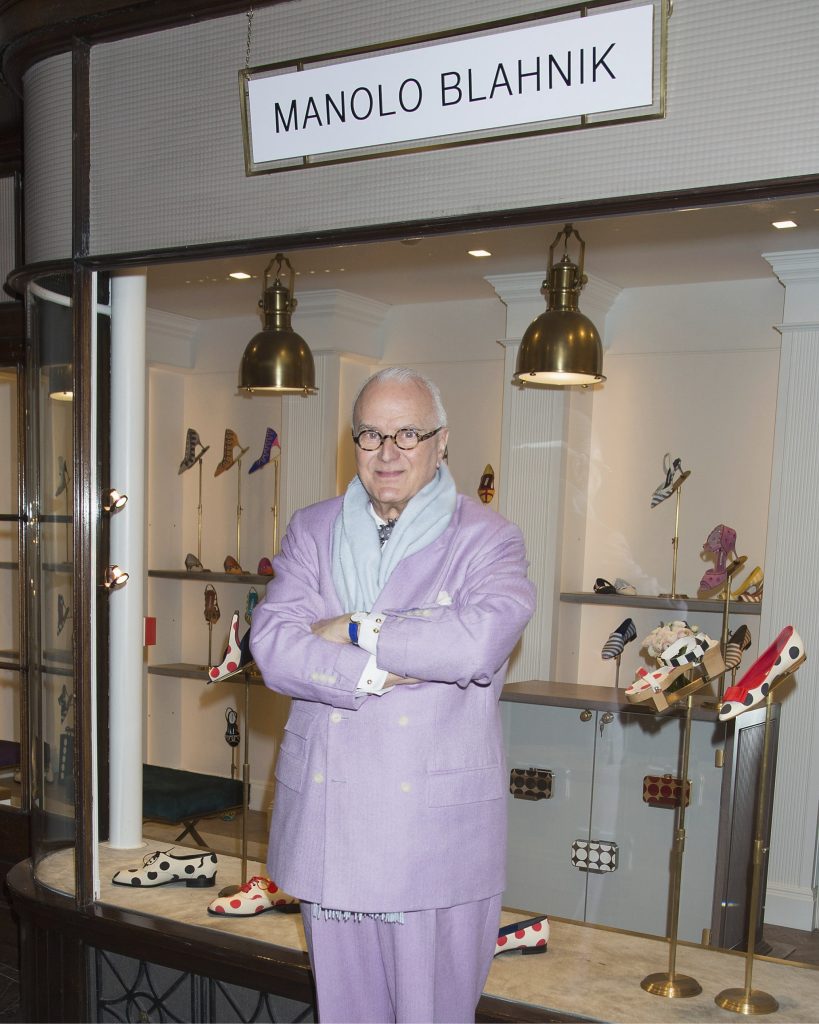
The renowned shoe designer Manolo Blahnik on starting out, his deep love of England and the evolution of his men’s shoes
Born in the Canary Islands, Manolo Blahnik spent much of his youth in Switzerland, before moving to London in the late 1960s. Since then he has become known for his exquisite shoe designs, and in the ’70s he created footwear for designers Ossie Clark, Jean Muir and Zandra Rhodes.
And, yet, while Blahnik is most famous for his women’s shoes, he has long been a designer of men’s shoes too, although, as he says, initially his motives were entirely selfish. ‘I always did men’s shoes, but I only did one or two pairs for myself,’ he explains. ‘I did sell some, because friends would see them and ask me to make some for them. So I did, for people like Bryan Ferry, David Hockney, [artist] Peter Schlesinger and [photographer] Eric Boman. I remember one style I did in rubber that almost looked like the canvas shoes children wore in America in the ’30s and ’40s. But mostly they were elegant.’
However, the focus had to be on Blahnik’s shoes for women, as this is where the demand was. ‘Men might want a couple of pairs, but there were women who would buy 20,’ he recalls. ‘So, for many years men’s shoes stayed a second thought for me, but I always enjoyed making them.’
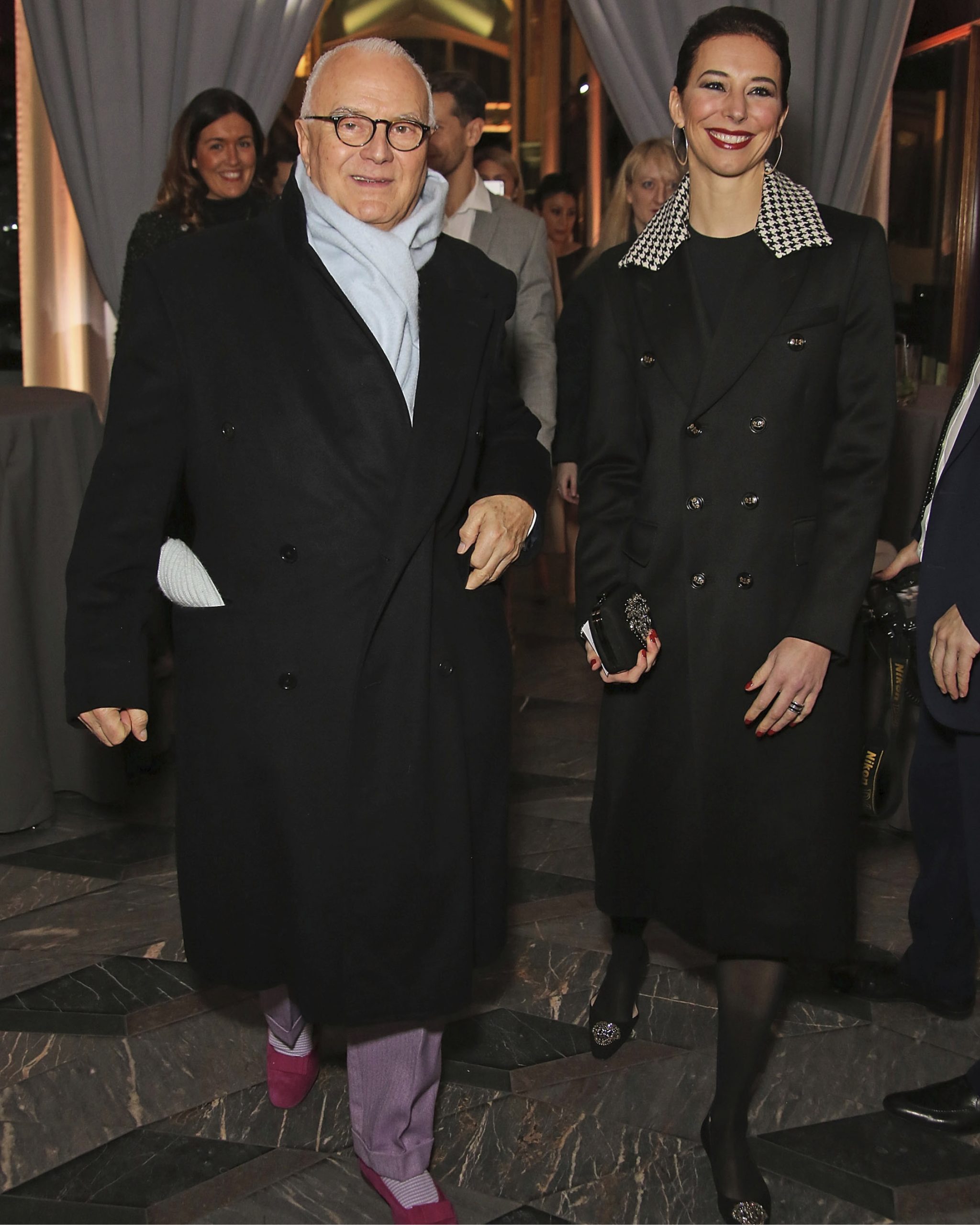
Then a few years ago, as the designer welcomed his niece Kristina into the business as CEO and set about expanding, it seemed the time had finally come to start creating a collection for men in earnest. And the duo, having committed themselves to the new project, needed to find a home for Manolo Blahnik for men.
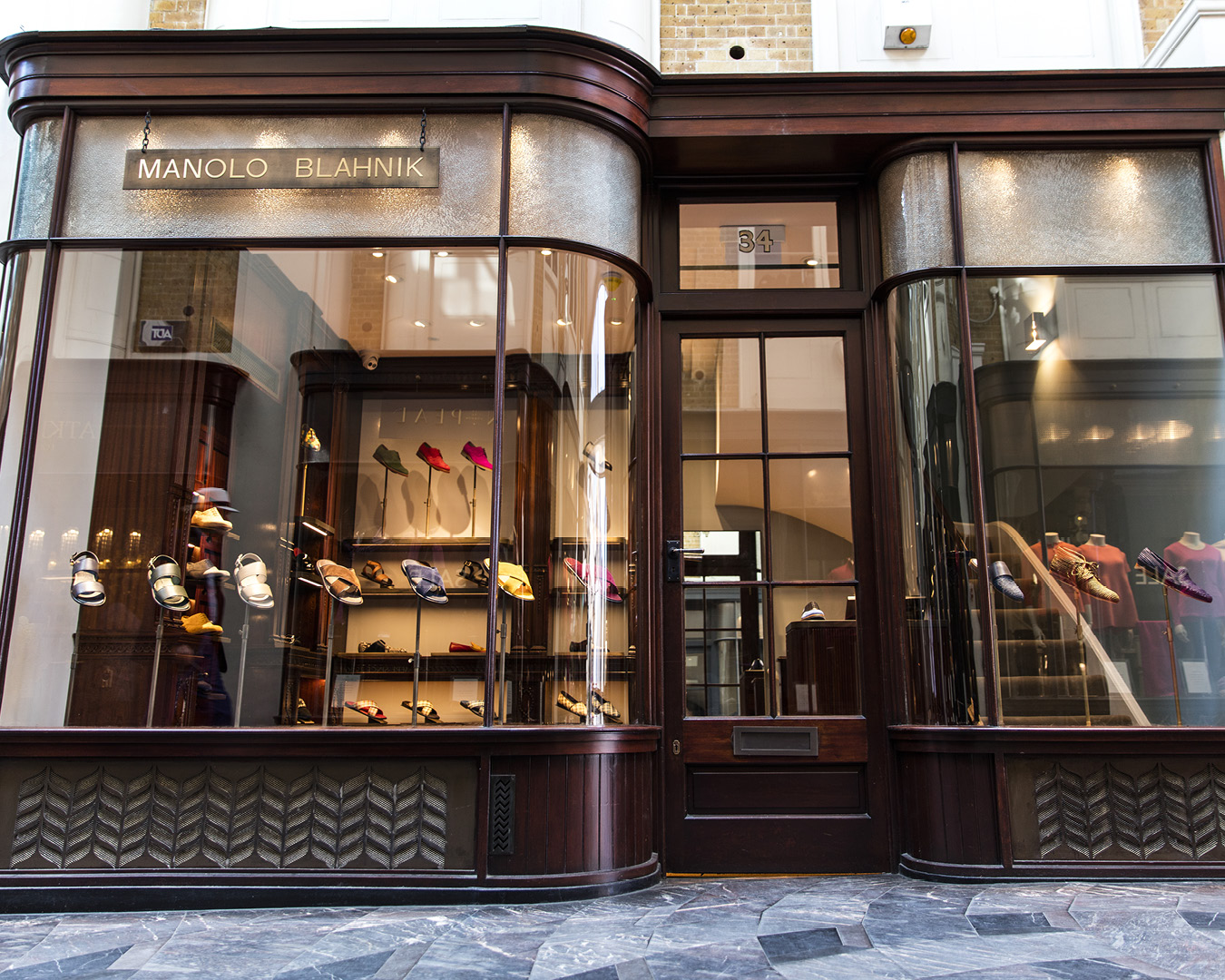
‘Kristina and I chose Burlington Arcade as the flagship store for my men’s collection back in 2015,’ recalls the shoemaker. ‘And to this day it is my only store in the world totally dedicated to men’s shoes.’
So, what was it about the Arcade that appealed?
‘Partly it was the location. My office is nearby, on Vigo Street at the corner of The Albany,’ he says. Incidentally, this is the house where the antiques dealer Christopher Gibbs used to live, the man who is said to have invented Swinging London. ‘But I do love the place,’ says Blahnik of Burlington Arcade. ‘It’s near the Royal Academy, which is a wonderful gallery. And, of course, the architecture of the Arcade is what I really like. And the history of the whole thing. It reminds me of incredible people, like [the Regency dandy] Beau Brummell, to whom there is a statue nearby in Jermyn Street.’
Would it be fair to say that his is something of a romantic view of this part of London? ‘Oh, yes. This is the idea of England for me. And it’s all about elegance. Mayfair still has that kind of spirit; it is what I associate with London, with Piccadilly. I hope it will always be like this.’
And suddenly he is extolling the virtues of his adopted home: ‘My love for England is so great. Even more than that of an Englishman, I suspect,’ he says. ‘It goes back to when I first came here. I felt it was the only place at the time where you had this incredible freedom and creativity. That is the Englishness that I really treasure very much.’
It was the end of the ’60s when Blahnik decided to make London his home. ‘Music was exciting; the writers were exciting; you’d go to the Royal Court Theatre in Chelsea and see extraordinary things,’ he remembers. ‘Lord Byron wrote about wanting to “sing and die” in a temple in Greece. Well, that is how I feel about London. About England.’
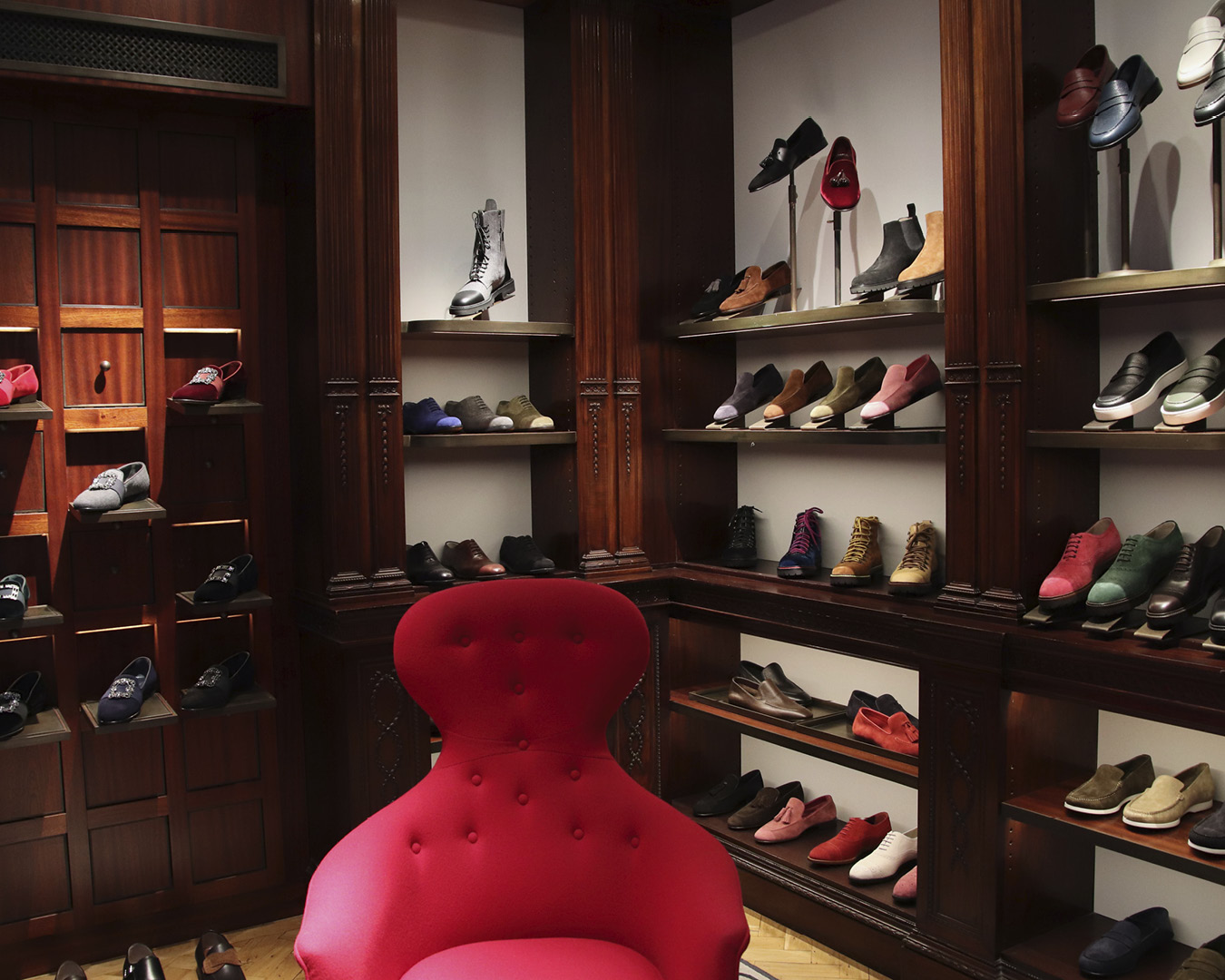
It is perhaps not too much of a stretch to see how this love of the imaginative tolerance and creativity of the English character, coupled with the historical elegance of Mayfair, have fed into Blahnik’s shoe designs for men.
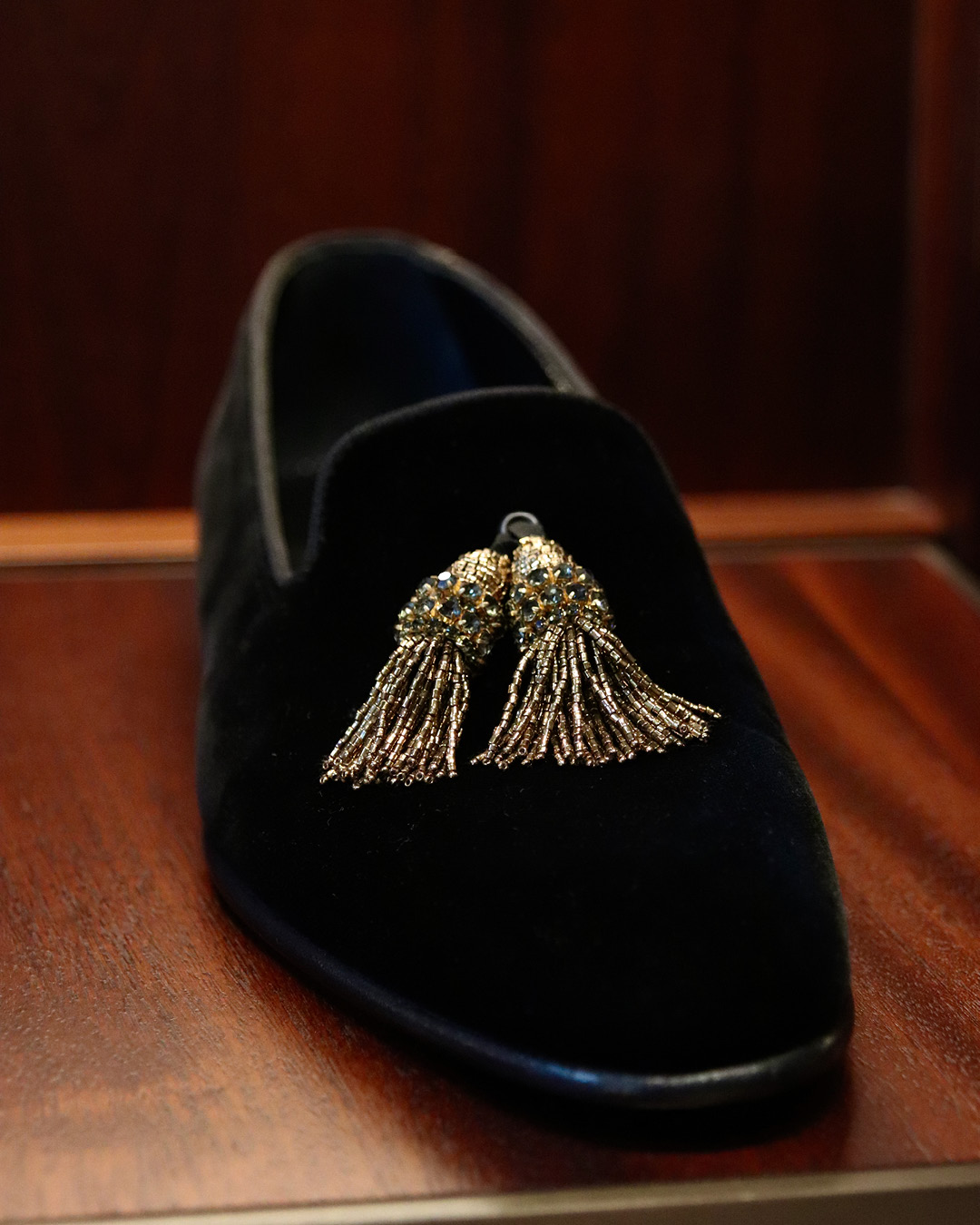
‘I really enjoy making men’s shoes now,’ he confesses. ‘I specialise in very beautiful ones, using patchwork and silk, embroidery with moiré, or grosgrain embroidery with ecclesiastical motifs. There’s one style – the Eaton – with a huge buckle that’s the colour of rubies.’ And he explains that these extravagant, decorated models have been made suddenly relevant by recent events. ‘I wanted them to be ready for the Coronation. It was unbearable when the Queen died. But now we have a king, and I wanted to mark the occasion with some new work.’
He says that, though some of the shoes for what he calls ‘the new period of the Coronation’ are ‘extreme’, using effects like silk patchwork, others are very simple: ‘There are styles that are not very modern, just very simple and beautiful and decorative. Comfortable. It’s summer, after all. Shoes can be simple for this time of year, so you just forget about them.’
So not all of Blahnik’s men’s shoes are dressy. He elaborates: ‘The only difference between designing for men and women is that for women I can do whatever I want. But for men, unless you have a customer who likes to be dressed up in the manner of, say, Derek Jarman [the film director], then the aesthetic is much more limiting. So I also make more classic styles.’
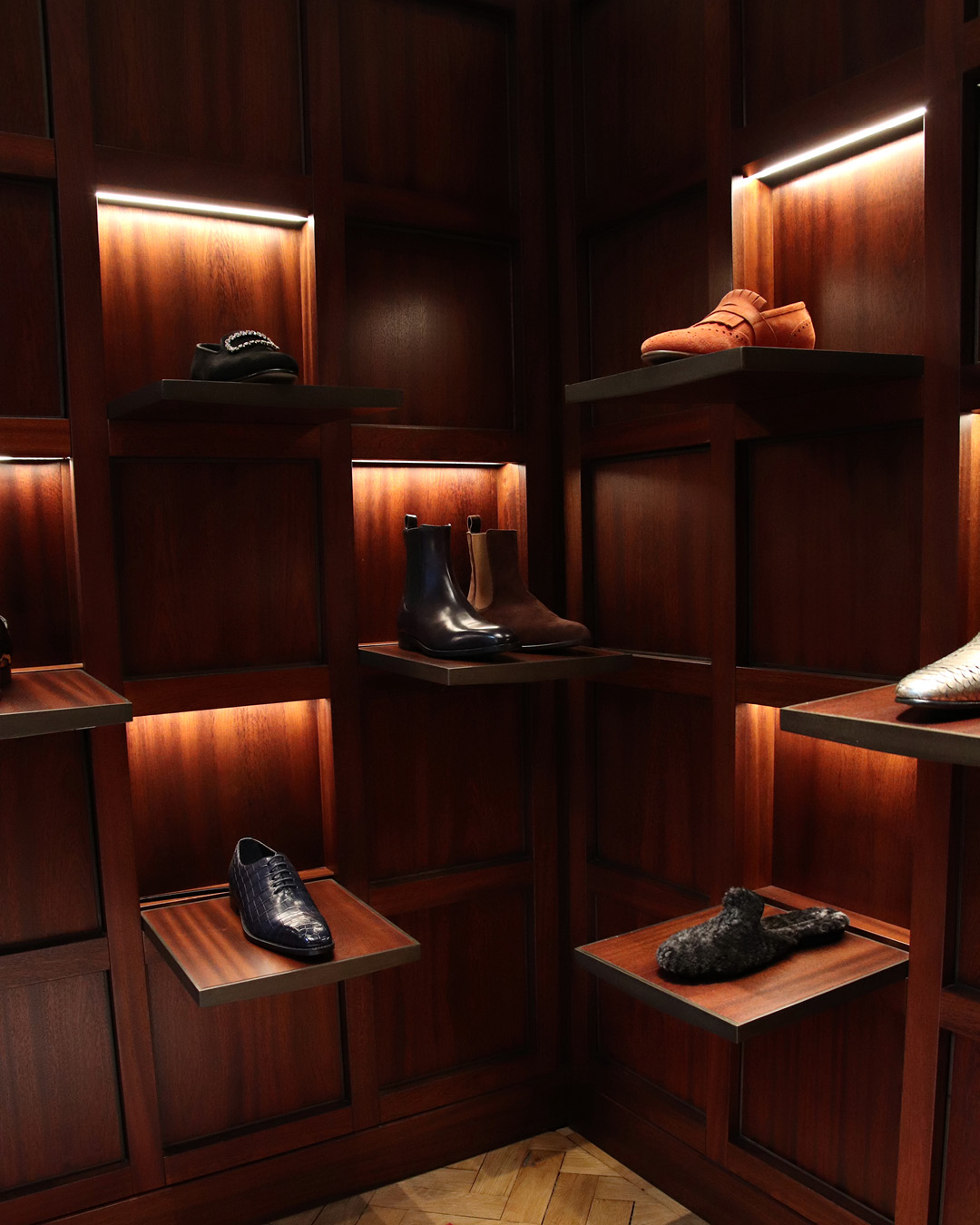
Indeed, asked what he’d recommend as the ideal footwear for a Mayfair man-about-town, he doesn’t hesitate: ‘A little Chelsea boot or another type of ankle boot’.
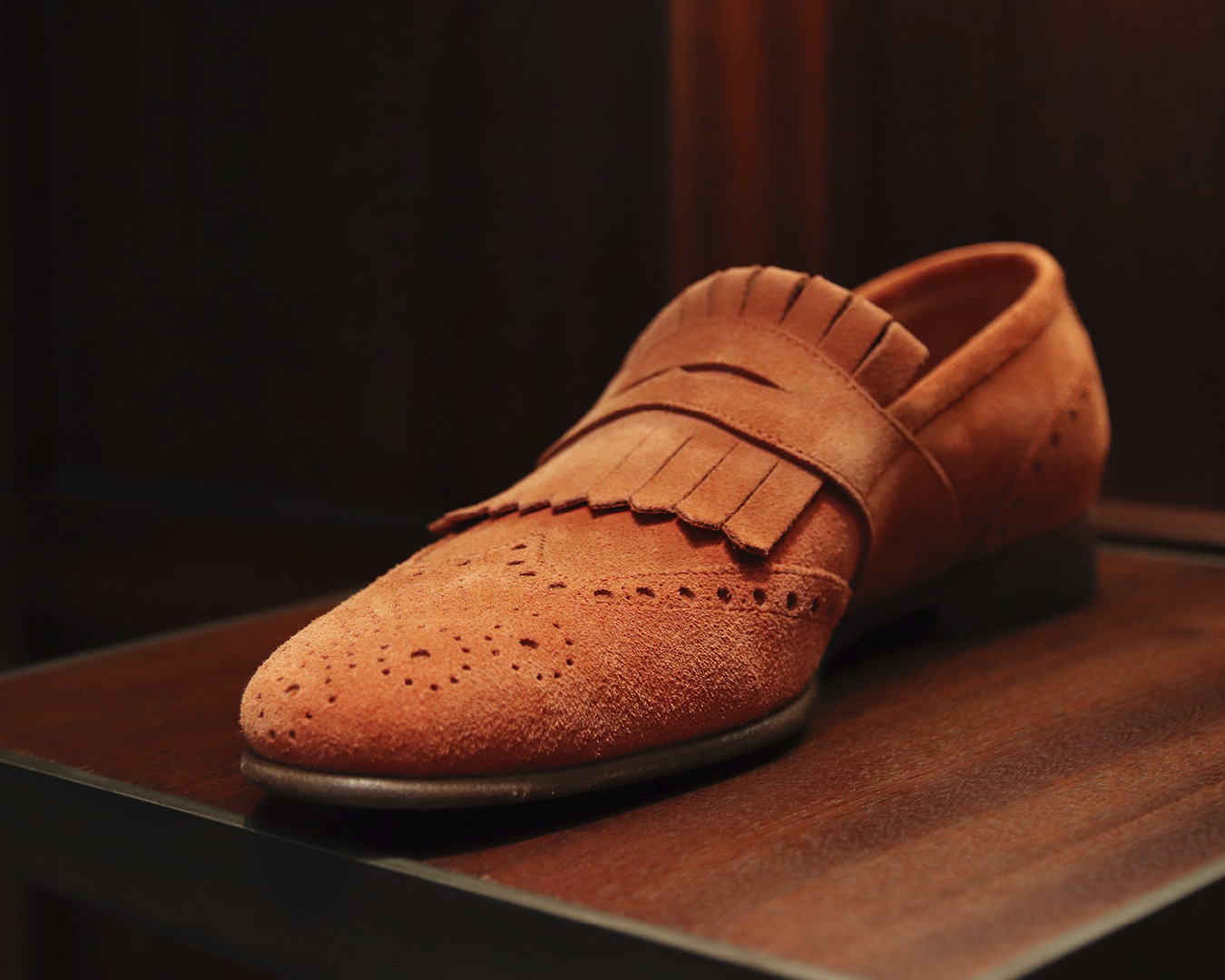
And what does he like to wear himself? ‘What would I like to wear? Well, some of my creations are a little bit extreme for me. I prefer Derbys and Oxfords – though you can do those with different colours and materials.’ Does he have a favourite? ‘These days I prefer the same buckskin shoe in a saffron colour – a classic cap-toe Oxford, the Witney – that’s very comfortable. I wear it all the time. If you wear classic shoes, you can break them in and they are really comfortable.’ But, he says, there are times when he will be more adventurous. ‘If I go out in the evening, I do wear a buckle. So really I have two looks for my shoes – one for everyday and one for parties.’
He also says that for summer he favours moccasins – ‘it’s like walking without shoes’ – and that they remind him of the shoes he saw being worn by fellow pupils at school at the beginning of the ’60s; Italian moccasins that had very thin soles. ‘I bought them immediately! I remember that as a very happy period for me, that summer. It’s almost as if the shoes didn’t exist.’ And there’s another inspiration from his past for his current spring collection: coloured leather weekend shoes. ‘They’re like old-fashioned tennis shoes in leather with rubber soles. They’re very simple: a white shoe has a white sole; a black one has a black sole.’
What all his shoes – fancy or classic – have in common, though, is that they are always made using the best materials. ‘I buy silks here and leathers here in this country, because they are the best. You have to use the best that you have. I use silks, for example, from Stephen Walters – 300-year-old makers of silk, among the most famous in the world. They’re beautiful, they last for ever. You can wear a pair of shoes made from Stephen Walters’ silk every day, or five or six times in your life. It’s up to you.’
Now, he says, we need to start valuing an eternally stylish wardrobe. ‘I want to go back to beautiful tailored suiting and coats, even hats. They don’t have to be old-fashioned – you can bring things up to date by using different materials and colours, for example. But I want people to buy things that they are going to wear for a long time. I am sick of cheap companies making throwaway things. The things in my wardrobe have lasted for 50 years, and if you buy a pair of my men’s shoes from Burlington Arcade and look after them, they will last for 50 years, too.’
Manolo Blahnik, 32-33 Burlington Arcade, London W1J 0PZ
Peter Howarth is the Editor of Times Luxx Men’s Fashion
Discover more stories
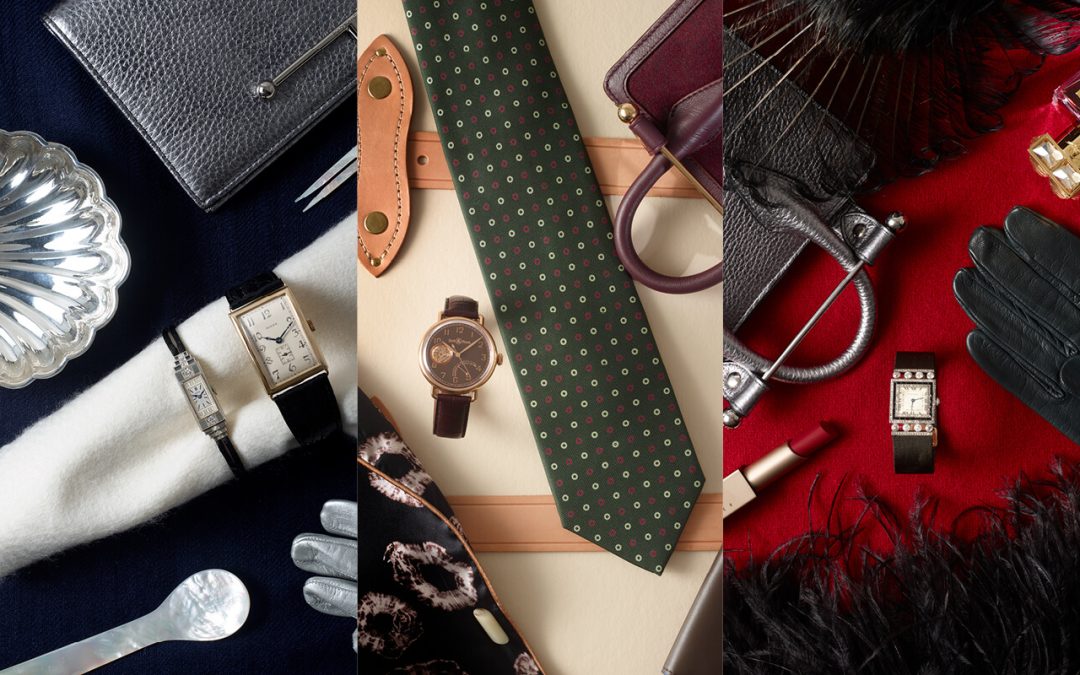
1920s-inspired timepieces
In keeping with the glittering Babylon takeover at Burlington Arcade, we channel the spirit and style of the era that left a lasting design legacy in our watch edit Some know it as “the Jazz Age”, others call it the “Roaring 20s” and the French think of it as “the Crazy Years”.

Art in the Arcade
Contemporary British potter and author Edmund de Waal is taking over the Gagosian Shop in the historical location of Burlington Arcade until 23 December.

Burlington Arcade celebrates the Roaring Twenties
We’re getting the party started with a glamorous Babylon-inspired takeover and a deep dive into the cultural phenomenon of the Jazz Age.
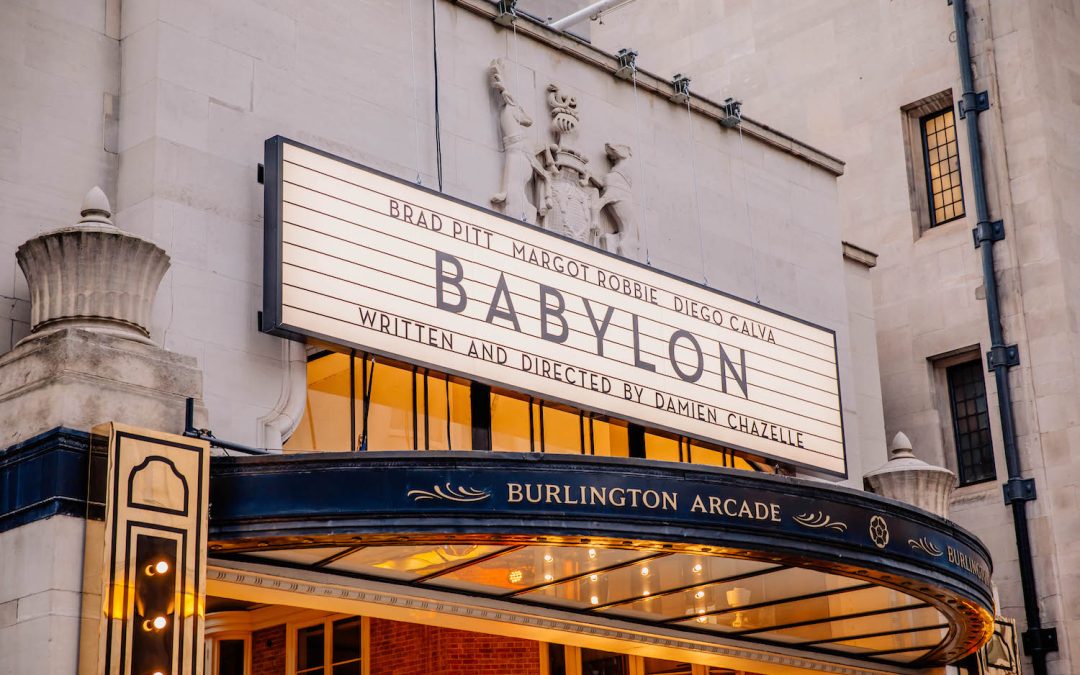
Burlington Arcade partners with Paramount Pictures’s BABYLON
We are delighted to launch our spectacular installation themed around the high-octane new film written and directed by Damien Chazelle, starring Brad Pitt, Margot Robbie and Diego Calva.