
The Surprising History of the Tiara

A tiara never fails to excite and delight. Ripe with romance and history, tiaras are a gateway to an era of bygone glamour, even if only for one night. But they haven’t always been the preserve of royalty and aristocracy. Tiaras originated in the simple headbands used to crown Olympic winners and victorious warriors in Ancient Greece.
Throughout history, diadems denoted power: from Egyptian Pharaohs to Roman Emperors. In the 18th century, decorative diamond-strewn tiaras became the norm among European and Russian royal courts. Queens and Empresses commissioned towering tiaras as a visible sign of their sovereignty. When Napoleon was crowned Emperor of France in 1804, his wife Empress Josephine wore a spectacular tiara, instigating the tradition of bejewelled headpieces for official occasions.

Where royal houses led, society’s upper echelons followed. Tiaras became a symbol of aristocratic wealth and status, as well as an investment to be passed down through generations. Tradition dictated that only married women may wear tiaras, so they became an essential bridal accessory. The late Queen Elizabeth II wore a diamond fringe tiara that belonged to her grandmother, Queen Mary, for her wedding in 1947; in turn, she lent it to her daughter Princess Anne and her granddaughter Princess Beatrice for their own nuptials, adding sentimental significance to a magnificent piece of jewellery.
Throughout the 19th and 20th centuries, houses such as Chaumet, Cartier, Boucheron and Van Cleef & Arpels created countless tiaras for wealthy clients to flaunt at grand balls and society weddings. These pieces convey the shifting trends in jewellery: from the naturalistic, floral styles of the 1800s, to the upright fringe tiaras inspired by Russian kokoshniks that were popular in the 1900s, to precise geometric Art Deco bandeaus. Over time, diamond-cutting became more advanced, and the introduction of platinum allowed goldsmiths to create finer, more ornate designs.

The popularity of tiaras waned after World War II as society evolved, fashions changed and life became less formal. Dinner invitations no longer specified “ladies should wear tiaras”. Most tiaras were refashioned into more wearable jewels, or dismantled as inheritance. Often, gemstones were removed and doled out among offspring; other times, tiaras were literally snapped into pieces, with a segment for each descendant. Which makes an intact antique tiara all the more extraordinary and alluring.
‘A tiara carries a certain gravitas that appeals to many collectors,’ says Guy Burton, director of antique jewellery specialist Hancocks, which offers a number of important 19th- and 20th-century tiaras. ‘The history, traditional craftsmanship, old-cut stones and provenance make antique tiaras very attractive.’ Associated as they are with royalty, it’s especially thrilling when a tiara has links to a majestic event.

The Anglesey tiara was created for the flamboyant Henry Cyril Paget, the 5th Marquess of Anglesey, who squandered his fortune and amassed £60 million of debt in today’s money, which was paid off after his untimely death with a 40-day auction. One thing kept from the block was a dazzling Victorian tiara, set with more than 100 carats of diamonds. The tiara was worn by family members at two royal coronations: that of Queen Elizabeth II in 1952 and that of her father, King George VI in 1937, when the 6th Marchioness of Anglesey was photographed wearing it by Cecil Beaton. ‘The tiara has a fascinating history and a royal connection is the very best provenance we could hope for’ says Guy.
The Anglesey tiara has the added benefit of being transformable: the lower row of old-cut diamonds can be worn as a sumptuous rivière. ‘Tiaras that convert to a necklace, bracelet or a set of clips always have added appeal for their versatility,’ says Guy. Many of Hancocks’ antique tiaras are convertible. A Victorian fringe tiara, created c.1880, features 32 carats of old-cut diamonds and transforms into a necklace and a bracelet, while a Victorian fleur-de-lys design by Carrington & Co can be mounted as a tiara or worn as a bib necklace.

One piece close to Guy’s heart demonstrates the timeless appeal of a beautifully crafted tiara. ‘We’ve been lucky enough to have some truly magnificent tiaras pass through our hands over the years but one that is particularly special is a turn-of-the-century diamond leaf tiara that we first sold over a hundred years ago. It recently found its way back to us like an old friend. We now hope to find it a new home for another hundred years or so.’
All tiaras available at Hancocks at House 52-53 Burlington Arcade
Sarah Royce Greensill is a jewellery expert and consultant for Vanity Fair, Tatler, Telegraph Luxury and Times Luxx.
Discover more stories
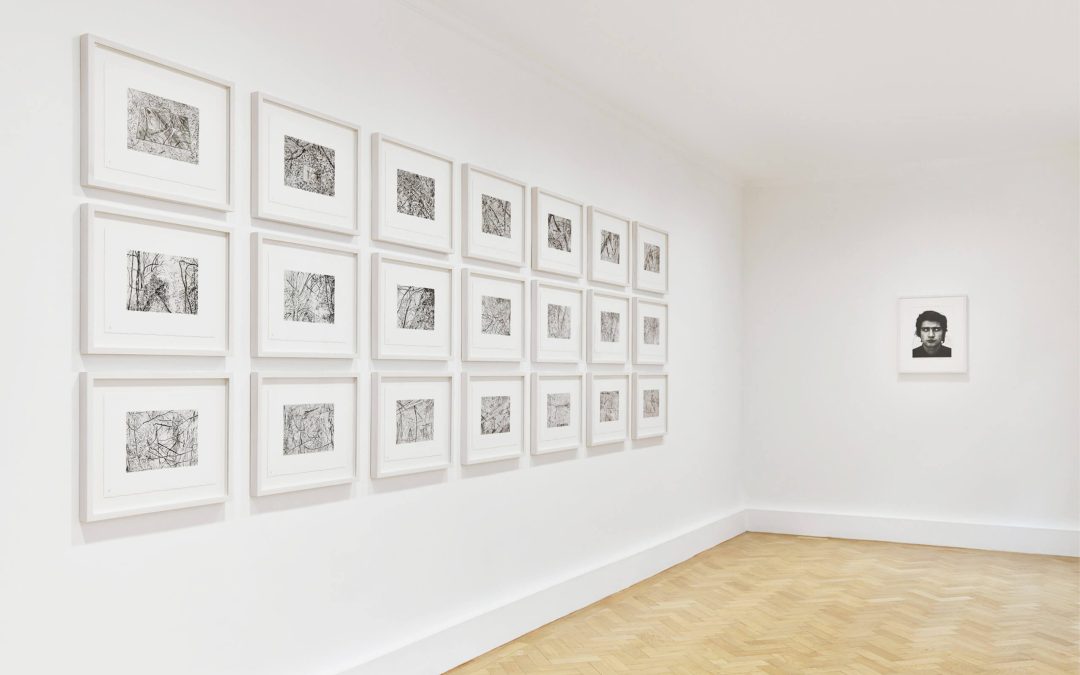
Giuseppe Penone Takes Over Gagosian Shop in Burlington Arcade with “Somersault”
Italian artist Giuseppe Penone is bringing his latest exhibition to London’s historic Burlington Arcade with “Somersault”.
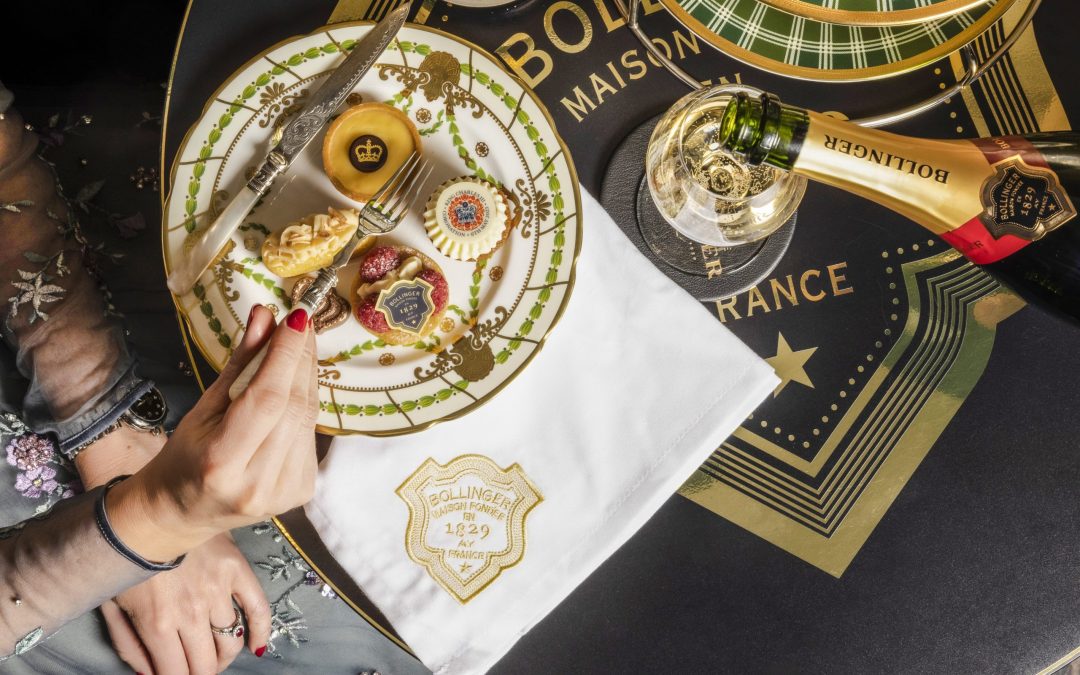
Coronation Afternoon Treat at the Bollinger Burlington Bar
Celebrate the Coronation of His Majesty King Charles III, with Bollinger Burlington Bar’s exclusive Afternoon Treat menu
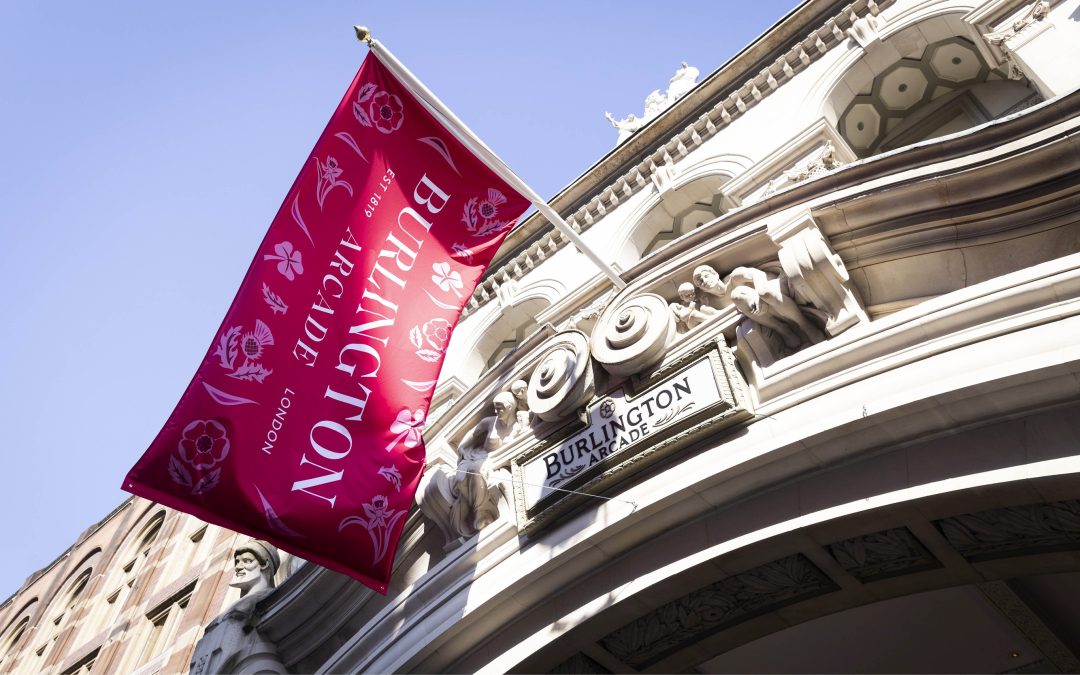
A Royal Connection
Home to several Royal Warrant holders, Burlington Arcade has a long association with royalty, and will be celebrating the coronation in style
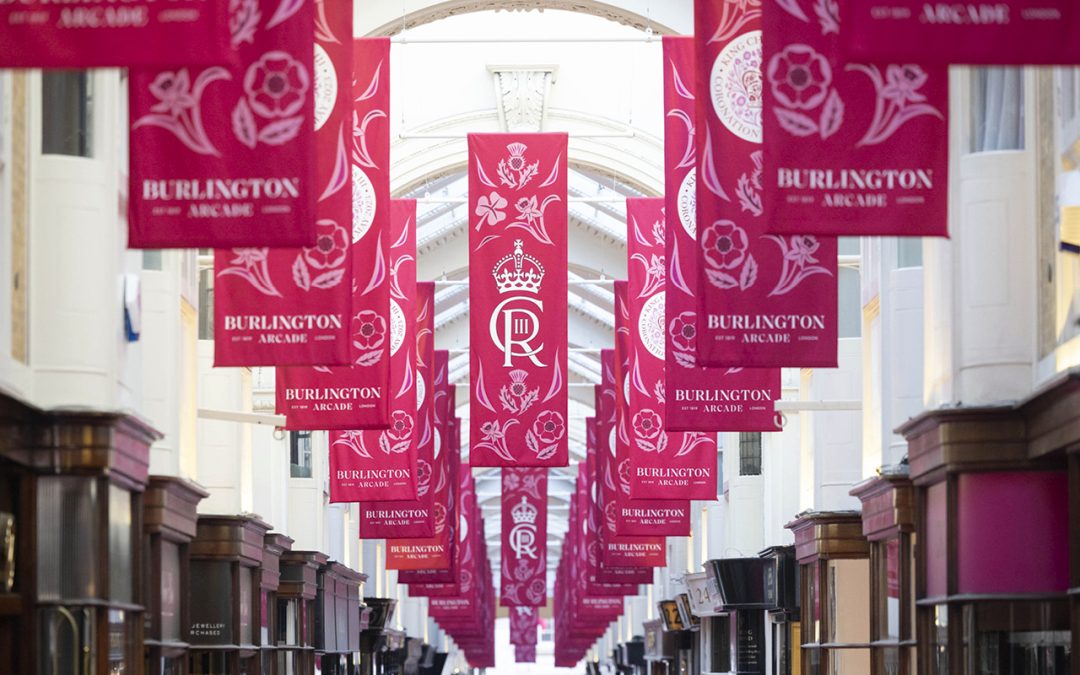
Royal Celebration: Burlington Arcade Unveils Commemorative Installation
Honouring the Coronation of His Majesty The King and Her Majesty The Queen Consort